
Thought Leadership

Law Blogs & Legal Insights
Anticipatory Bail Under Section 438 CrPC: Grounds, Drafting & Court Strategy
When the Fear of Arrest Becomes Real Few situations are as stressful as hearing that a complaint...
If the marriages are done with mutual consent, then why not the divorce too?
Mutual Consent Divorce Under Section 13B of the Hindu Marriage Act, 1955 Yes, you read it right....
Greater Noida Industrial Development Authority Vs. Prabhjit Singh Soni And Ors: Case Analysis
Citation – AIR 2024 SC 1227Court – Supreme CourtDecided on – 12th February, 2024Bench – Dr. D.Y. Chandrachud, C.J.I., J.B. Pardiwala, and Manoj Misra, JJ.INTRODUCTIONIn a recent landmark decision, the Supreme Court addressed a significant issue under the Insolvency...

Why Marital Rape Is Not An Offence In India?
INTRODUCTION In India, the legal treatment of marital rape remains a contentious issue, with the act not recognized as a criminal offense under the Bharatiya Nyay Sanhita (BNS). While Section 63 of the BNS criminalizes rape, it contains an exception stating that...

The Legal Issue Arising In Lockup Period In IPO & How Do You Trade It?
Concept An overwhelmingly large proportion of initial public offerings (IPOs) report lock-up provisions that prohibit existing stockholders from selling their shares within a specified period after the offering date. These lock-up periods may last as long as 180 days....

Strategies That Can Make A Company Recession-proof
Concept of recession-proof Firms plan to be resistant to downturns and remain stable during extreme financial times. To do this, they utilize a few procedures. In the first place, they enhance their items or administration so they're not excessively subject to one...
Section 12A: Recent Development In IBC, 2016
INTRODUCTION Many creditors, whether operational or financial, may file an application for initiation of the corporate insolvency resolution process before the adjudicating authority, which is NCLT. The Insolvency and Bankruptcy Code, 2016. Thus, it became of utmost...
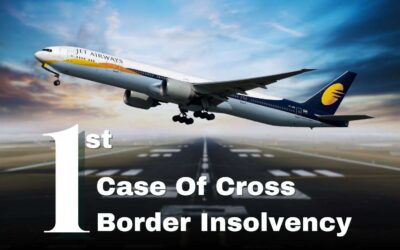
First Indian Company To Undergo Cross Border Insolvency: Jet Airways
INTRODUCTION As a result of the National Company Law Appellate Tribunal's decision to establish a "Joint Corporate Insolvency Resolution Process" under the Insolvency and Bankruptcy Code (IBC), Jet Airways became the first Indian company to experience cross-border...

Status of Homebuyers as Financial Creditors
Introduction Taking money from the allottees of the real estate project is a common phenomenon. Further, this money is used by the developers for construction purposes. This is a true fact that sometimes developers take money from the allottees but do not fulfil the...

Concept of International Arbitration
ABSTRACT Usually disputes between the parties take too much time to settle. With loss of time the parties also suffer loss of finance occurred due to complex and long-stretched battle between the parties. Without a doubt it can be said that court proceedings are...

Cross Border Insolvency
INTRODUCTION It's very common to hear the news about companies, industries, or firms going bankrupt. The companies go bankrupt for various reasons, like poor decision-making, non-repayment of debt, increased competition, disputes with creditors or other members of the...